
Signs Your Aircon Needs a Chemical Wash
Musty smell, weak cooling, water leaking, ice, high bills. Six symptoms that mean it's time for a chemical wash — and which tier.
Updated:
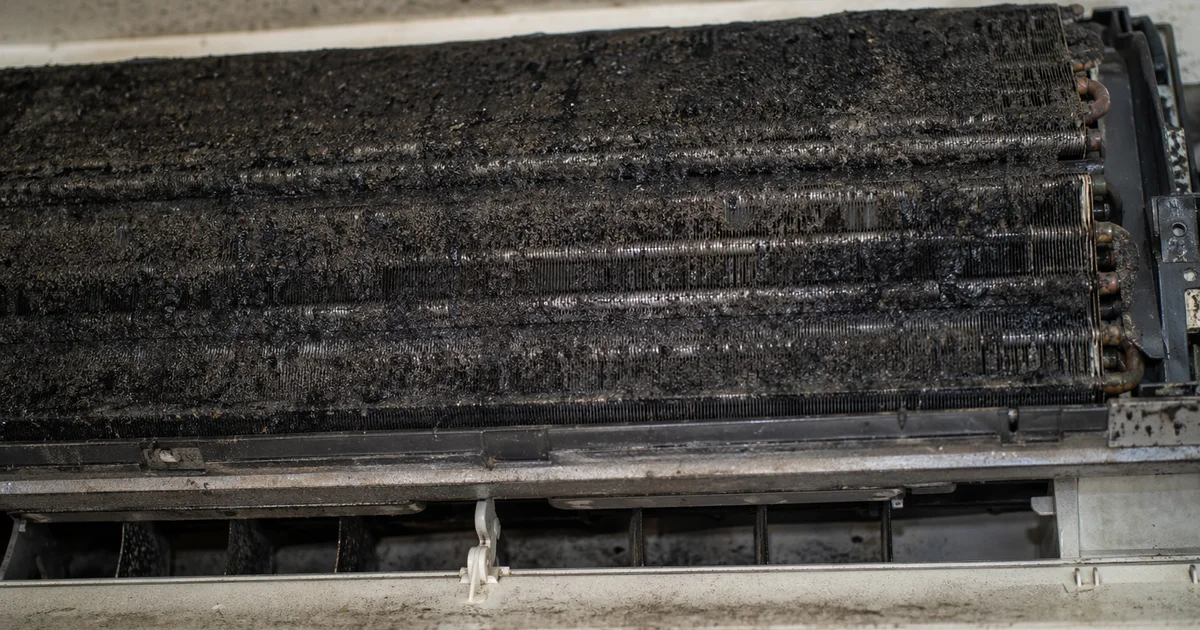
You know how a sudden drop in cooling performance usually points to a severely clogged system.
Living with Singapore’s constant 80% humidity means evaporator coils quickly become a breeding ground for bacteria. Our team at Aircon Chemical Wash SG, the dedicated chemical wash division of Billy Aircon founded in 2003, sees these issues daily. The 26 technicians on our roster agree that basic surface cleaning simply masks these deeper problems.
Let us look at the exact signs aircon needs chemical wash, what the data actually tells us, and explore a few practical ways to respond.
Six Signs Aircon Needs Chemical Wash
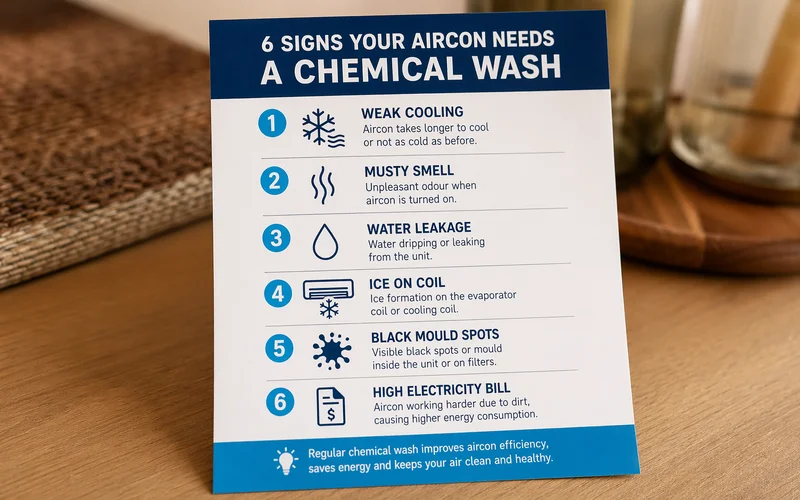
If you see one or more of these six symptoms, your aircon needs a chemical wash. Surface cleaning or filter replacement will not fix any of them.
We frequently encounter homeowners who try basic wiping, only to see the problems return within days. A deeper clean is the only permanent fix.
- Musty, sour, or mouldy smell when the aircon turns on.
- Weak cooling despite recent standard servicing.
- Water dripping inside the unit (not from the outdoor condensate).
- Ice forming on the evaporator coil.
- Visible black mould or yellow slime on the fins when the cover is opened.
- Unexplained electricity bill jump of 10 to 25% with no usage change.
The first two usually point to Non-Dismantle Chemical Wash. The next three almost always indicate Full-Dismantle Chemical Overhaul territory. An unexplained electricity bill jump can be either tier depending on how long the unit has gone unserviced.
What Each Symptom Tells Us Mechanically
Every symptom is a direct physical result of dirt, bacteria, or moisture building up inside the unit. Understanding these mechanics helps you choose the right repair strategy.
Musty Smell from Biofilm
A musty smell indicates biofilm on the coil and bacteria in the drain pan. The smell is a metabolic by-product that gets aerosolised through the air outlet every time the unit runs.
We often find specific mould strains, like Aspergillus, thriving in these damp spaces due to Singapore’s high humidity. A simple surface wipe never reaches the actual source of these spores.
Weak Cooling and Restricted Airflow
Weak cooling usually means you have restricted airflow across the evaporator coil. Biofilm thickens the boundary layer on the metal fins.
Less air contacts the cold coil, which means less heat exchange happens. Refrigerant levels are usually fine, but the coil is simply buried under thick dirt.
Water Dripping Inside
Water dripping inside points directly to a blocked drain pan or condensate pipe. Sludge from biofilm collects enough to block the natural water path.
Our technicians note that standard Singapore HDB flats often use 13mm or 16mm PVC drainage pipes. These small diameter pipes choke easily, leading to specific issues:
- Condensate backs up rapidly
- Water overflows the pan into your room
- Unpleasant smells develop from the stagnant water
This situation requires a full dismantle to clear properly.
Ice on the Evaporator Coil
Ice on the coil happens because of restricted airflow combined with the refrigerant temperature dropping below freezing. Standard servicing will not fix this issue.
The underlying biofilm restriction needs to go completely. A full dismantle overhaul resolves the restriction and prevents your compressor from overworking.
Visible Mould or Yellow Slime
Visible mould or slime means the biofilm has reached macroscopic colonies. By the time it is visible to the naked eye, the growth is deep within the internal components.
A chemical bath soak is the only effective treatment at this late stage. Leaving this untreated poses a continuous risk to your indoor air quality.
The Unexplained Electricity Bill Jump
A 25% efficiency drop on an average 4-room HDB flat consuming 370 kWh can waste nearly $30 every single month based on early 2026 SP Group tariffs.
A sudden bill jump occurs because the compressor runs longer per cycle to maintain your target temperature. Cooling efficiency drops drastically when coils are blocked.
We know that the SP Group electricity tariff sits around 29.11 cents per kilowatt-hour. Realistic post-wash savings range from 10 to 25% on heavily neglected units.
Urgency Levels
Deciding when to act depends entirely on the severity of the aircon symptoms Singapore residents face. Review this table to determine how quickly you need to schedule a technician.
Ignoring severe signs like dripping water can cause costly damage to your walls and flooring. We recommend taking immediate action for anything involving leaks or visible ice.
| Symptom | Urgency |
|---|---|
| Mild musty smell, light cooling drop | This month, Non-Dismantle Wash |
| Moderate smell, noticeable cooling loss | This week, Non-Dismantle or Overhaul |
| Foul smell, visible mould | This week, Full-Dismantle Overhaul |
| Water dripping inside | Same-day, Full-Dismantle Overhaul |
| Ice on coil | Same-day, Full-Dismantle and gas check |
Edge Cases
Not every symptom fits perfectly into a clear category. Some situations require a bit more context before deciding on the right level of service.
Many owners make the mistake of topping up refrigerant when the real issue is restricted airflow. We advise checking the physical condition of the indoor unit first to avoid wasting money.
- Smell only when AC starts but fades after 5 minutes: Typical biofilm aerosolisation. A Non-Dismantle wash handles it.
- Smell that persists hours later: Heavy biofilm or stagnant drain pan water. A Full-Dismantle is required.
- Cooling weak only in afternoon heat: This is usually an airflow restriction. A Non-Dismantle Wash is the standard fix.
- Cooling weak even at night with low ambient temp: Request a gas check first, then follow up with a chemical wash if needed.
When in doubt, WhatsApp us at +65 9456 0875 with a quick description and we will recommend the right tier without sending a technician unless you book.
Addressing a musty aircon smell early saves you from dealing with major water leaks down the road.
Take action today on the signs aircon needs chemical wash to protect your indoor air quality and keep your electricity bills in check.
Frequently Asked Questions
Is a musty smell always from mould inside the aircon? expand_more
My aircon is dripping water inside. Is that a chemical wash issue? expand_more
Can a chemical wash fix weak cooling on its own? expand_more
Related Guides
Can Aircon Chemical Wash Really Lower Your Electricity Bill?
Dirty coils force compressors to overwork. Realistic monthly savings from a chemical wash, the mechanism explained, and what NEA tells us.
Aircon Chemical Wash vs Steam Cleaning — Pros and Cons
What each method reaches, what it can't, the eco trade-offs, and when chemical wash is the only option that works.
Aircon Mould and Bacteria — Health Risks Every Singapore Household Should Know
Black mould, Legionella-family bacteria, respiratory and allergy risks from neglected aircons. Why anti-bacterial spray alone isn't enough.
Chemical Wash vs Chemical Overhaul — Which Do You Need?
Non-Dismantle (S$80–S$100) vs Full-Dismantle (S$130–S$180). A symptom-based decision table, price framing, and when to upgrade.

Ready to book a chemical wash?
WhatsApp us for a same-day chemical wash quote, or call our team directly.