
DIY vs Professional Aircon Chemical Wash — What Goes Wrong
Coil corrosion, warranty voiding, drain clogs, electrical risks. Five things that go wrong when DIY aircon chemical wash is attempted at home.
Updated:
We see the exact same scenario play out every week across Singapore. Homeowners spot an $18 can of diy aircon chemical wash at the hardware store and think they can bypass the professional servicing fees. The reality hits a few weeks later when the unit starts leaking or blowing warm air.
Our team at Aircon Chemical Wash SG, the dedicated division of Billy Aircon founded in 2003 and now 26 people strong, has documented the hidden costs of taking shortcuts. Using a cheap home aircon coil cleaner often causes irreversible damage to sensitive components that a professional Non-Dismantle Chemical Wash would have prevented. Let’s examine the data behind these failures, exactly what breaks, and how to fix a botched attempt.
We will show you precisely what professional technicians do differently. This knowledge helps you protect your equipment.
The facts speak for themselves.
Five Things That Go Wrong With DIY
The five most common failures linked to diy aircon cleaning singapore service calls include clogged drain pipes, corroded aluminium coils, voided warranties, electrical shorts, and severe tenancy liability issues. This data comes straight from daily service logs. Our technicians rank these issues by their frequency and repair cost.
1. Drain Clogs from Loosened Sludge
DIY surface cleaning loosens thick biofilm but lacks the necessary high-pressure water flow to flush it completely out of the system. This leftover sludge drops directly into the drain pan and blocks the condensate pipe, causing an immediate indoor leak. We regularly get emergency calls for this exact problem.
Fixing an HDB floor trap or concealed pipe choke costs upwards of S$130 in 2026. That expense makes the initial attempt to save money completely counterproductive. Our repair process requires a complete dismantle to clear the solid blockage safely.
2. Coil Corrosion from Wrong-pH Chemicals
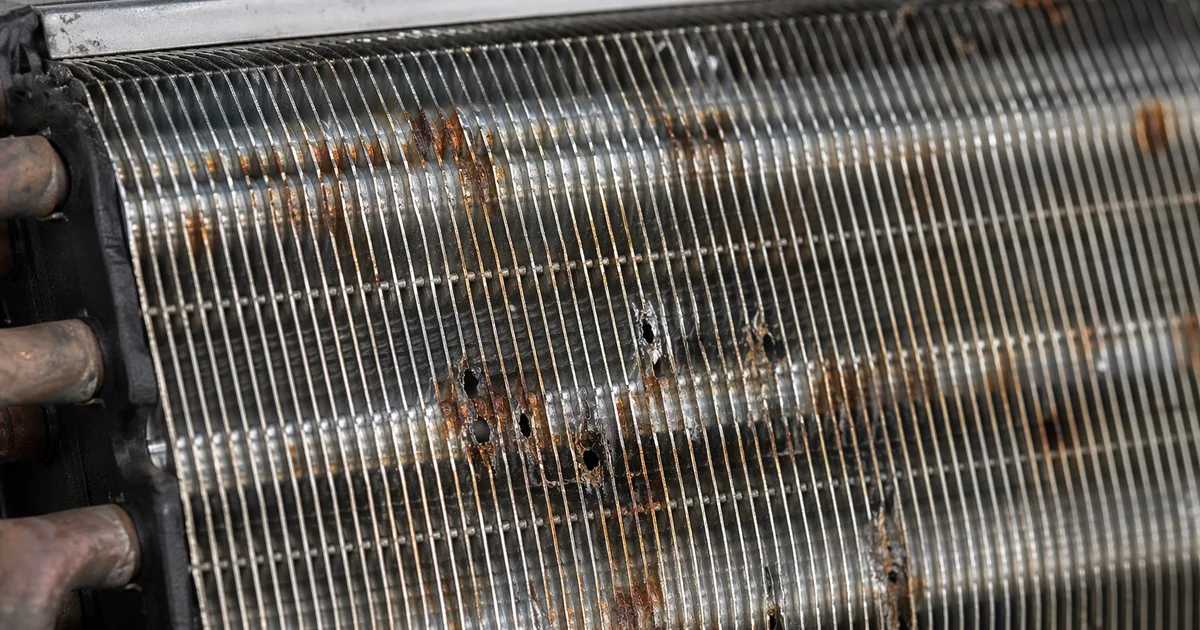
Aircon evaporator coils consist of sensitive aluminium fins that require a highly specific pH balance between 7.0 and 8.5 to survive. Using acidic household cleaners or heavy alkaline degreasers strips the protective oxide layer right off the metal. We constantly replace coils that have been eaten away by cheap, mismatched chemical sprays.
Once the aluminium pits, the unit loses its heat-exchange efficiency and develops pinhole refrigerant leaks. A coil replacement in Singapore currently runs anywhere from S$500 to S$800. Our suppliers often cannot even source replacement coils for units older than five years, forcing a full system upgrade.
3. Warranty Voiding
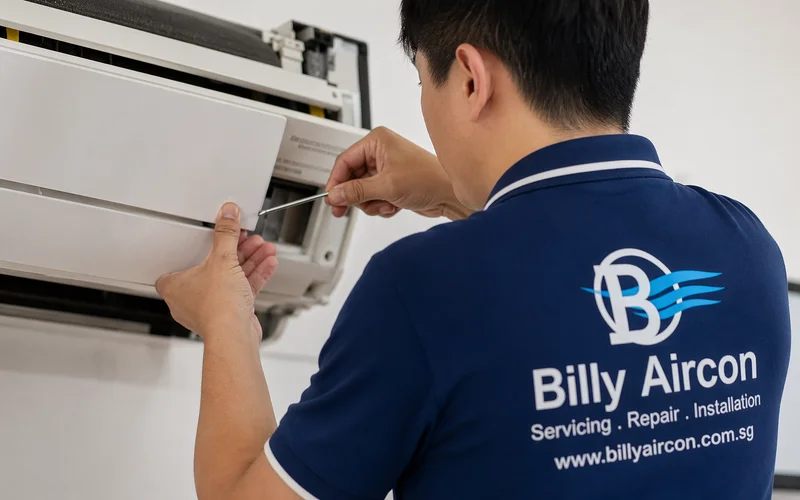
Major aircon manufacturers in Singapore, including Daikin, Mitsubishi Electric, and Panasonic Enviro, explicitly require licensed professionals to handle any chemical cleaning. Any evidence of DIY chemical application immediately voids the manufacturer warranty for all subsequent failures. We always advise clients to protect their original three to five-year warranty window.
Brand technicians can easily spot the distinct, uneven corrosion patterns left behind by non-professional spray cans. They will deny your claim even if the broken part is completely unrelated to the coils. Our team provides the official service receipts needed to keep those warranties active and valid.
4. Electrical Safety Risk
A standard fan coil unit houses a complex control board, sensitive sensor wiring, and a live 240V power feed. Spraying liquid cleaners into a powered unit without fully isolating the electricity creates a massive fire hazard. We have inspected numerous burnt circuit boards caused by rogue moisture from DIY attempts.
Replacing a fried inverter control board can easily cost half the price of a brand new fancoil. Professional technicians physically remove the entire electronic board before a single drop of chemical enters the housing. Our strict safety protocols prevent these expensive electrical shorts from ever happening.
5. Insurance and Tenancy Issues
Standard Singapore tenancy agreements make renters fully liable for any aircon damage caused by unauthorised DIY maintenance. While a typical lease limits tenant liability for normal wear and tear to a S$150 minor repair clause, negligence shifts the entire replacement cost to the renter. We frequently mediate disputes where a landlord demands full payment for a S$1,500 unit destroyed by chemical spray.
If a DIY-induced leak damages a S$3,000 hardwood floor, insurance companies will outright reject the water damage claim. They cite the non-professional work as a breach of policy terms. Our S$80 standard chemical wash service eliminates this massive financial risk completely.
What Professional Service Does Differently
Professional servicing relies on complete electrical isolation, precise chemical matching, and high-pressure rinsing to protect the equipment. The entire process is designed to remove deeply embedded mould without risking the delicate aluminium fins. We use a very specific, multi-step process that no canned spray can replicate.
This method ensures the system runs efficiently for months. The results are measurable and verifiable. Our technicians follow this exact checklist for every single job:
- Custom pH-balanced detergents formulated exactly for modern aircon coil materials to prevent oxidation.
- Total power isolation and complete control board removal before any liquids are introduced.
- High-pressure water flushing for 10 to 15 minutes to guarantee absolutely zero chemical residue remains.
- Drain pan and pipe clearing to flush out heavy sludge and prevent future costly chokes.
- Anti-bacterial finishing applications that standard retail products simply lack.
- A solid 90-day workmanship warranty, whereas DIY work leaves you completely unprotected.
When DIY Is Reasonable
DIY maintenance is only safe when it involves basic surface dusting and washing the primary plastic filters. Anything that requires liquid chemicals, drain pan access, or cover removal carries far too much risk for an amateur. We encourage homeowners to perform light upkeep between professional visits.
This light maintenance improves daily airflow and keeps electricity bills manageable. A simple routine is highly effective. Our recommended safe DIY tasks include:
| Safe DIY Task | Frequency | Method |
|---|---|---|
| Filter Cleaning | Every 30 days | Pull the plastic filter, wash with mild soap and water, and air dry completely. |
| Surface Dusting | Every 14 days | Use a soft brush vacuum attachment on the outer cover and exposed front fins. |
| Airflow Checks | Weekly | Ensure no curtains or furniture block the cold air path from the blower. |
Beyond these basic steps, the risk-to-benefit ratio turns sharply against the homeowner. The Non-Dismantle Chemical Wash at S$80 covers everything safely and professionally. We strongly suggest booking this service rather than gambling with expensive hardware.
What to Do If You Already Tried DIY
If you have already sprayed chemicals and the unit is now leaking, smelling sour, or failing to cool, you must turn the power off immediately. Leaving the acidic or alkaline residue on the fins will continue to corrode the metal the longer the unit runs. We can usually clear those DIY-induced drain clogs and neutralise the chemicals before permanent damage sets in.
You need to book a Full-Dismantle Chemical Overhaul to rescue the system. A fast response is absolutely critical here.
Our technicians will arrive, inspect for fin damage, and simply fix the problem without any lectures.
Frequently Asked Questions
Can I use a store-bought coil cleaner safely? expand_more
Does DIY cleaning void my aircon warranty? expand_more
What's the worst that can happen if I try? expand_more
Related Guides
Can Aircon Chemical Wash Really Lower Your Electricity Bill?
Dirty coils force compressors to overwork. Realistic monthly savings from a chemical wash, the mechanism explained, and what NEA tells us.
Aircon Chemical Wash vs Steam Cleaning — Pros and Cons
What each method reaches, what it can't, the eco trade-offs, and when chemical wash is the only option that works.
Aircon Mould and Bacteria — Health Risks Every Singapore Household Should Know
Black mould, Legionella-family bacteria, respiratory and allergy risks from neglected aircons. Why anti-bacterial spray alone isn't enough.
Chemical Wash vs Chemical Overhaul — Which Do You Need?
Non-Dismantle (S$80–S$100) vs Full-Dismantle (S$130–S$180). A symptom-based decision table, price framing, and when to upgrade.
Ready to book a chemical wash?
WhatsApp us for a same-day chemical wash quote, or call our team directly.